Co-living guides
Finding a place on a Taiwan working holiday: before you fly, your first home and avoiding deposit scams
Coming to Taipei on a working holiday visa? You don't have to lock in a year-long lease before you leave. We go through it in the order it happens: what you can do before you fly, your first few days after landing, move-in costs, the rental scams that 165 (Taiwan's anti-fraud hotline) warns about, and whether you need an ARC. Sources include the Bureau of Consular Affairs, the National Immigration Agency and the relevant laws.
Seal Co-living team Updated 17 min read Translated from Chinese · 中文原文
On this page
- How long can you stay in Taiwan on a working holiday visa?
- What can you do before you leave?
- What should you do in your first few days?
- How much money do you need to move in?
- Is it worth signing for 30 days first and finding a long lease later?
- Which rental scams should you watch out for?
- How do you keep your deposit safe from scammers?
- Do you need an ARC on a working holiday?
- FAQ
- Once you've landed
- Sources
Your first home on a working holiday doesn't need to be booked for a whole year before you leave. From abroad, photos can't tell you whether the room gets daylight, whether the neighbors are noisy or whether your housemates keep the same hours as you. The safer plan is to view places online before you go and narrow down your shortlist. Once you land, move into somewhere on a residential lease of 30 days or more, live there for a month or two, and then decide whether to stay on or switch to a longer lease.
On money, there's only one rule. Don't send a deposit to hold a room until you've seen it in person and signed the lease.
From planning to moving in, the order usually goes like this.
- Before you leave, find the page for your nationality in the list of country pages of the Bureau of Consular Affairs (BOCA), part of Taiwan's Ministry of Foreign Affairs. Check whether you'll be getting a visitor visa or a resident visa, and how long each stay can be. The visa application also asks for insurance covering your time in Taiwan, so buy it now.
- While you're still abroad, use video viewings to cut your list down to two or three places, and book somewhere to sleep for your first few nights.
- In your first few days after landing, get a phone number, buy a transport card and arrange in-person viewings.
- On signing day, bring your passport and check the landlord's ID and their proof that they have the right to rent the place out. The deposit can't be more than 2 months' rent, and you pay it when you sign.
- Around move-in day, pay the first month's rent and any other fees on the dates in your lease (a management fee, a utilities fee, a move-in fee and so on; every landlord names them differently).
- And the ARC (Alien Resident Certificate)? Most working holiday visas are visitor visas, so you won't need one. The UK is the exception.
How long can you stay in Taiwan on a working holiday visa?
BOCA's website lists working holidays under "Working Holiday (Youth Exchange)" and describes them as mainly a holiday, with work on the side. Taiwan signs a separate agreement with each country, so who can apply, the quotas and the documents you need all vary. A friend's experience may not match yours. Go back to the list of country pages and read the one for your own nationality.
For housing, the part that matters is the "visa type" section. Most countries, Japan, South Korea and Australia among them, get a multiple-entry visitor visa. It's valid for 1 year, and each entry lets you stay up to 180 days, counted from the day after you arrive. Want to stay longer? Within the 15 days before your stay runs out, apply for an extension at a National Immigration Agency (NIA) service center. You can get up to another 180 days. With or without an extension, your total stay can't go past 1 year from your first entry.
Those numbers shape your lease. Your move-out date has to fall within the time you're allowed to stay, and if you plan to live here for more than 180 days on a single entry, get the extension done first. The working holiday visa also counts as a work permit, so if you find a job, you don't need to apply for a separate permit.
When you apply for the visa, most countries ask for proof of funds for your first stretch of living costs, plus insurance for your time in Taiwan. The amounts and insurance terms differ by country. The amount your proof of funds has to show also makes a handy benchmark for your budget.
What can you do before you leave?
Start with the money. Move-in costs get their own section further down. In 2026, Taiwan's minimum wage is NT$29,500 a month, or NT$196 an hour (Ministry of Labor). Put your expected pay and the rent side by side with those figures and you'll have a much better feel for what you can afford.
Then come the viewings. Online photos always look good, so treat them as a rough idea at best. A video viewing tells you far more. Ask the person on the other end to carry the camera around so you can see whether the room has a window, how many people share the bathroom and whether you can cook in the kitchen. While you're at it, ask how long the walk to the MRT station takes. On the call, get clear answers to these:
- What's the monthly rent? How many months' deposit?
- What do you pay on top of rent? How are water, electricity, internet and the management fee charged?
- What's the minimum lease? What happens if you move out early?
- Is there an English version of the lease? Will you be signing with the owner or with a company?
Book your first few nights before you fly. If the lease starts a few days after your flight lands, that's fine; a hotel or hostel will tide you over. The fear of landing with nowhere to stay, the kind that makes people rush to pay a landlord they've never met, is exactly what scammers play on. 165 Anti-Fraud, the police's anti-scam website and hotline, lists this very line among the scripts it has seen: "Several people are after this place, so transfer money now to keep your viewing slot."
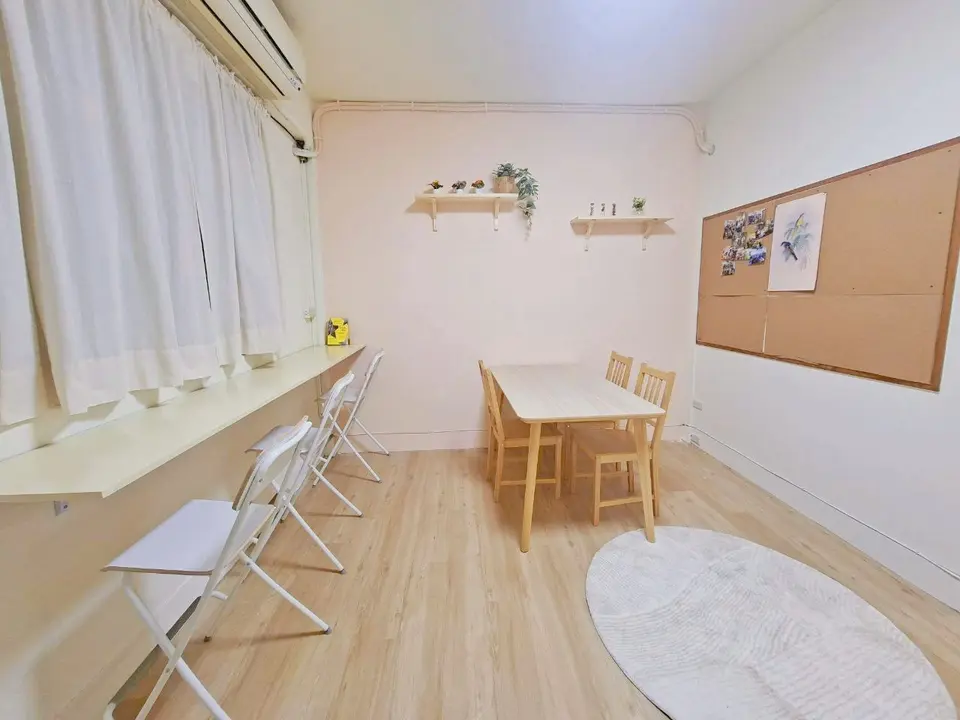
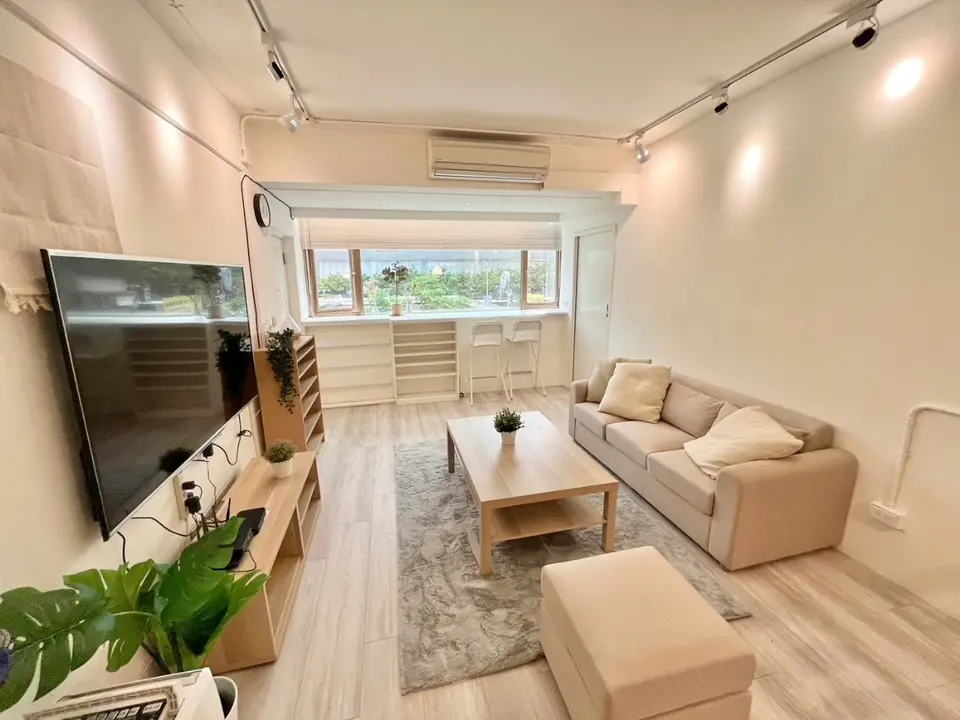
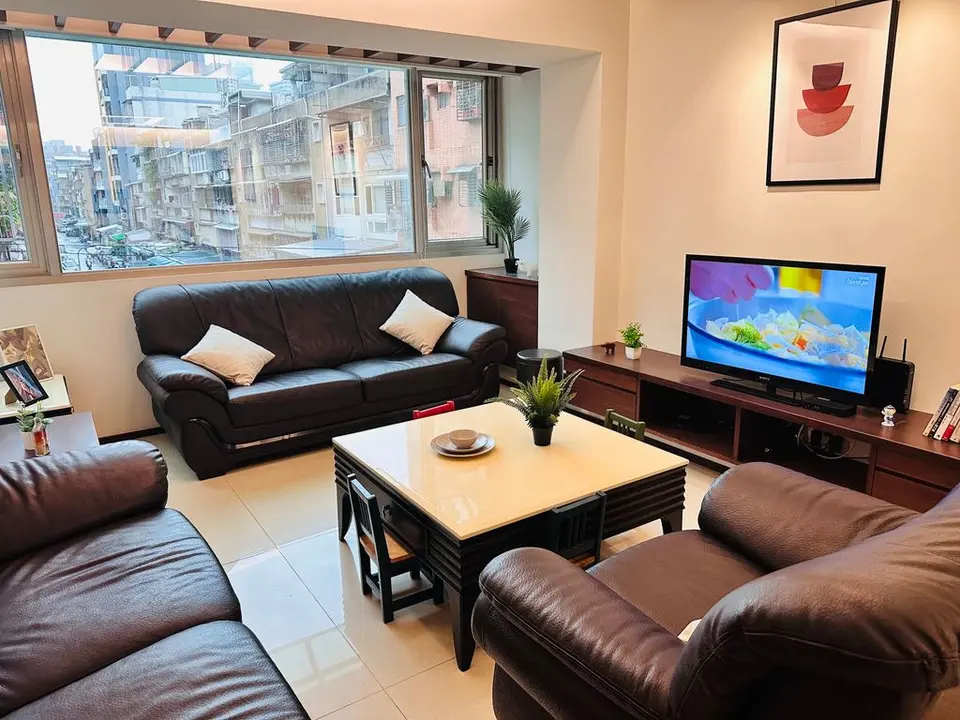
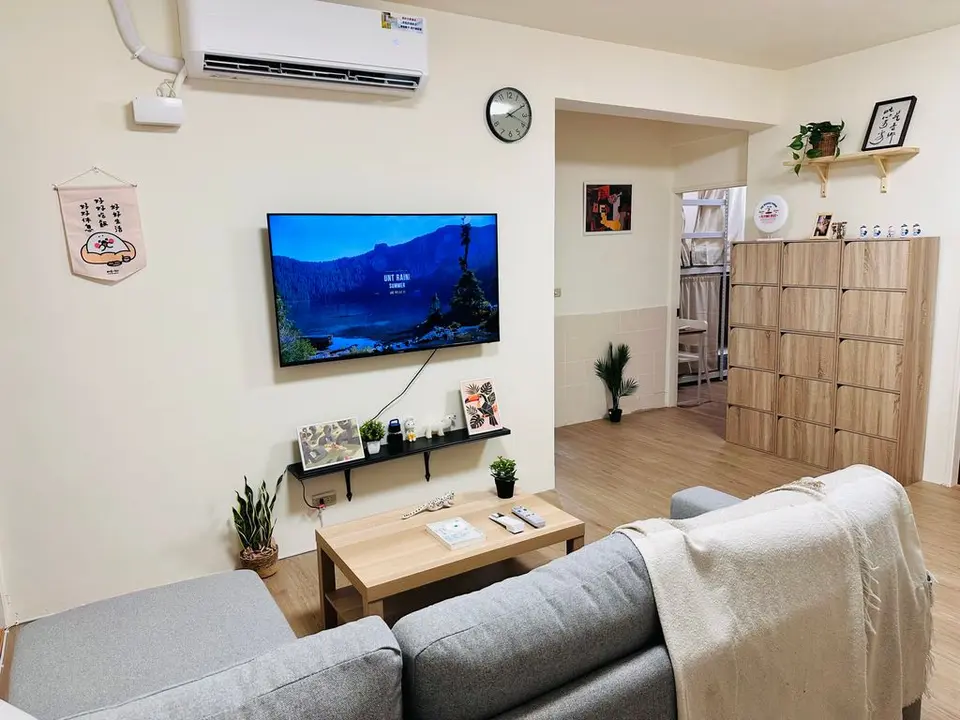
If you're considering Seal Co-living, our houses in Taipei are all close to MRT stations. You can book an in-person viewing or a video viewing, even from abroad, with times set in Taiwan time. Send 「看房」 (Chinese for "viewing") or "viewing" to our official LINE account (add us as a friend on LINE), or fill in the online booking form. Ask us directly how signing and payment work when you book.
What should you do in your first few days?
| When | What to do | Why |
|---|---|---|
| The day you arrive | Get from Taoyuan Airport into the city and to wherever you're staying the first few nights | Put your bags down first |
| Days 1 to 2 | Get a phone number and buy a transport card | Landlords and companies need a way to reach you, and you'll be taking the MRT or a bus to viewings |
| Days 2 to 5 | See your shortlisted rooms in person, and try the commute while you're out | Daylight, noise and housemates only show up when you're standing there |
| Before signing | Take the lease home and read it | The Ministry of the Interior gives you at least 3 days to review a residential lease |
| When signing | Bring your passport, and check the landlord's ID and proof of their right to rent the place out | Both sides have to show ID for the other to check |
| After moving in | Open a bank account and find out where to go when you're ill | You'll need them to get paid and to see a doctor |
The bank account takes an extra trip if you have no ARC, and most working holiday makers won't have one, since they're on visitor visas. Under the Financial Supervisory Commission's rules, you'd then open an account with your passport plus a UI number information sheet (統一證號基資表), which you first have to get at an NIA service center. The post office (Chunghwa Post) has stopped accepting this route for now (as checked on 9 October 2026). Whether a bank will take it depends on each bank's own review.
We've written a separate article for each of these steps. For getting into the city from the airport, read How to get from Taoyuan Airport to Taipei: Airport MRT, buses, taxis and late-night arrivals. Phone numbers are in How to get a phone number in Taiwan: prepaid SIM, eSIM or monthly plan, and the ID you need, transport in New to Taipei? How to get around by MRT, bus, YouBike, TPASS and taxi, bank accounts in Banking in Taiwan as a foreigner: what to bring to open an account, how to pay rent by transfer, and whether mobile payments work and seeing a doctor in Seeing a doctor in Taipei: when NHI starts, clinics and the ER, and English-friendly hospitals. The ten questions to ask at a viewing are collected in Choosing a Share House in Taipei: 10 Things to Check Before You Move In.
How much money do you need to move in?
Work it out in two parts: the room, and everything else.
For the room, the law puts a ceiling on the deposit. Article 7 of the Rental Housing Market Development and Regulation Act (the Rental Housing Act) says a deposit can't be more than 2 months' rent. There's a rule about timing as well. The Ministry of the Interior's mandatory terms for residential leases say the deposit is handed to the landlord "at the same time as the lease is signed". If someone asks for a deposit before you've even seen the place, that alone is a red flag.
At Seal Co-living, moving in means paying the following:
- Deposit: 1 month of rent.
- First month's rent: depends on the room type and lease length (see the table below).
- First month's utilities fee: NT$1,000, which covers water, electricity, gas, internet and shared supplies such as toilet paper and garbage bags.
- Move-in fee: NT$1,500, paid once.
Monthly rent starts at NT$8,000 (≈ US$250) per bed, but that's the price on a 12-month lease. The shorter the lease, the higher the monthly rent. The minimum lease is 30 days, and the tiers look like this:
| Lease length | Monthly rent per bed |
|---|---|
| 30 days to under 6 months | Base price + NT$1,000 |
| 6 to under 12 months | Base price + NT$500 |
| 12 months or longer | Base price |
Say you sign the shortest lease, 30 days, for a bed in a shared room. Up front, you'd need the deposit (1 month of rent) + the first month's rent (the bed's base price plus the lease-length surcharge for the shortest tier in the table) + the utilities fee of NT$1,000 + the move-in fee of NT$1,500. Base prices differ from room to room, so the exact total depends on which one you choose. When you book a viewing, ask us to work it out for you.
Outside the room, keep money aside for your first few nights' accommodation, a phone number, credit on your transport card, and bedding. Pillows, duvets and sheets aren't listed on our website, so it's safer to bring your own, or ask us before you move in. For a whole month's living costs, Living in Taipei in 2026: how much does it cost per month? has the full table.
Is it worth signing for 30 days first and finding a long lease later?
You'll pay a bit more each month. In return, you're not betting a whole year on a place you chose from overseas.
Within a week or two of moving in, you'll know how thin the walls are, what your housemates' routines look like and how long the commute to work takes. Many people only settle on a job after they land, too. Stay somewhere short first, then pick a longer lease near your job once you know where it is. You'll spend a lot less time crossing the city for nothing.
There's a legal side to 30 days as well. Article 4 of the Rental Housing Act says the act doesn't cover leases shorter than 30 days, or rentals for leisure or travel. Protections such as the deposit cap only apply when you sign a residential lease of 30 days or more.
A working holiday lasts 1 year at most, so for you a "long lease" may simply mean the months you have left. If you know from the start that you'll be in Taipei for more than half a year, going straight to a tier of 6 months or more works out cheaper. Not sure yet? Sign a short lease first. Students and people taking language classes can find out how to look for a place in Student housing near NTU, NTUST and NTNU: dorms, off-campus rooms and one-semester leases.
Which rental scams should you watch out for?
165 Anti-Fraud, run by the Criminal Investigation Bureau, has written up the following tricks.
- Posts in Facebook groups showing beautifully decorated rooms at a rent well below the going rate.
- Asking for a deposit before you get a "priority viewing". In one case 165 describes, the victim transferred 2 months' rent as a deposit. The "landlord" then started making excuses and went silent, and the victim didn't even know the other person's real name or address.
- "Several people want this one. Transfer money to keep your viewing slot, and we'll refund you if you don't like it."
- "The landlord is overseas. If you want it, transfer money now to hold it."
- Moving the conversation to a private LINE chat, talking you into paying first and only then setting a viewing date. On the day, there turns out to be no room for rent at that address, or the "landlord" can no longer be reached.
How do you keep your deposit safe from scammers?
165's warning is blunt. Don't transfer money for a place you haven't seen in person. Don't hand money to someone who says they're the landlord before you've signed. And be especially careful once someone wants to talk privately on LINE. When you check a listing for real, go through it in this order.
- Make sure they have the right to rent the place out. 165 recommends confirming that the person owns the property, and the mandatory lease terms require the landlord to show you proof of their right to rent it and proof of identity. If a company is subletting the place to you, Article 9 of the Rental Housing Act requires the owner's written consent, and the company has to give you that document when you sign.
- If you're dealing with a master-lease or property management company, look it up in the Ministry of the Interior's real estate service industry information system (不動產服務業資訊系統). You can search by company name or by its unified business number (統一編號). Individual landlords aren't in this system, so not finding one there is normal. In that case go back to step 1 and ask them to show proof of their rights to the property and their ID.
- Compare with the going rate. Rent that's unreasonably low should make you suspicious. Co-living, en-suite room, room with shared bathroom or monthly rental apartment? Comparing places to live in Taipei for foreigners gives rough prices for each type of housing in Taipei, and 165 also suggests searching on rental sites that screen their listings more carefully.
- The deposit is no more than 2 months' rent, and you pay it when you sign. You get at least 3 days to take the lease home and review it, and the landlord can't ask you to give up that review period.
- Look at the account name before you transfer. The name on the receiving account should match the landlord or management company named in the lease. If it doesn't, hold off and ask why.
- Still feels off? Call the 165 anti-fraud hotline to check, or go straight to the police.
While you're still abroad, use video viewings to narrow down your list; that's as far as you need to go. If you really must book ahead, finding the company's registration isn't enough on its own, because scammers can pose as a registered company. Contact the company yourself through the phone number or email address published on its official website (not the one the other person gave you), and confirm that whoever you've been talking to really works there. The receiving account has to be in the company's name too. If any one of these doesn't match, don't pay.
Seal Co-living's company name, unified business number and rental housing service business registration number are all on our About us page, ready to check against the Ministry of the Interior's system. At a viewing, you can also ask us who you'd be signing with and which documents you'd receive.
Do you need an ARC on a working holiday?
For most nationalities, no. Their working holiday visa is a visitor visa, not a resident visa. The NIA's filing guide also states that people who enter on a working holiday visa can't switch to residence while in Taiwan, unless other rules say otherwise.
The UK is the exception. The Taiwan-UK Youth Mobility Scheme issues a resident visa, so within 30 days, counting from the day after you arrive, you have to apply for an ARC at an NIA service center (Article 22 of the Immigration Act). The awkward part is that BOCA's flowchart says 15 days, which doesn't match the 30 days in the law and on the page for UK nationals. Your safest bet is to apply within two weeks of landing.
The application needs proof of address, and the example the NIA gives is a lease. Planning to use a Seal Co-living lease? Tell us at the viewing and ask which documents we can provide. Whether the application is approved is still up to the NIA. The documents and deadlines are covered in detail in ARC (Alien Resident Certificate) application and address change: what to bring and how long you have.
FAQ
Can I book a room while I'm still abroad?
Video viewings, yes. Money, not yet. 165's advice is not to transfer anything for a place you haven't seen in person. If you really have to book ahead, pay only when all three check out: the company's registration shows up in the system, you've confirmed through the phone number or email on its official website that the person really works there, and the receiving account is in the company's name. For how this works at Seal Co-living, just ask us when you book a viewing.
Can I rent for just one month on a working holiday?
That depends on the landlord. At Seal Co-living the minimum lease is 30 days, and we only sign residential leases. Monthly rent on a short lease is higher than on a long one; the tiers are in the price table above.
What's the most a landlord in Taiwan can ask for as a deposit?
On a residential lease of 30 days or more that isn't for leisure or travel, the deposit can be at most 2 months' rent (Articles 4 and 7 of the Rental Housing Act). Seal Co-living charges 1 month of rent.
How do I get my deposit back when my working holiday ends and I leave Taiwan?
When the lease ends, you've handed the place back and settled what you owe, the landlord has to return your deposit, or whatever is left of it after deductions (Article 7 of the Rental Housing Act). Ask how it will be returned before you leave the country: in cash, or into which account. If it's going to an account overseas, agree in advance on who pays the transfer fee.
Can I join National Health Insurance on a working holiday?
Not on a visitor visa. BOCA's flowchart states that working holiday makers on visitor visas can't join National Health Insurance (NHI). The visa pages for Japan, South Korea and Australia also require insurance covering your time in Taiwan when you apply, so your policy should run until the day you leave Taiwan. The UK's resident visa is listed as eligible for NHI. For when you can enroll, see Seeing a doctor in Taipei: when NHI starts, clinics and the ER, and English-friendly hospitals.
What should I do if I think I've run into a rental scam?
Don't pay anything more. Call the 165 anti-fraud hotline to check, or report it to the police.
Once you've landed
Everything else you need to sort out in your first month is in Your first month in Taipei: the order and deadlines for your ARC, phone, bank account and health insurance, so work through it one item at a time. New to co-living? Getting the hang of co-living for the first time: getting along with housemates, shared spaces, and your first-week checklist covers getting along with housemates and has a checklist for your first week.
To see a room first, send 「看房」 (Chinese for "viewing") or "viewing" to our official LINE account (add us as a friend on LINE), or browse room types and prices in our list of houses.
Sources
(All retrieved on 2026-10-09.)
- 1.Bureau of Consular Affairs, Ministry of Foreign Affairs: Working Holiday (Youth Exchange) information by countryboca.gov.tw/np-388-1.html
- 2.Bureau of Consular Affairs: working holiday visa information for Japanese nationalsboca.gov.tw/cp-388-45-eee84-1.html
- 3.Bureau of Consular Affairs: working holiday visa information for Korean nationalsboca.gov.tw/cp-388-51-cb41a-1.html
- 4.Bureau of Consular Affairs: working holiday visa information for Australian nationalsboca.gov.tw/cp-388-44-0023d-1.html
- 5.Bureau of Consular Affairs: working holiday (youth exchange) visa information for UK nationalsboca.gov.tw/cp-388-50-4f69b-1.html
- 6.Bureau of Consular Affairs: flowchart of working holiday visa applications and entry, all countries (PDF)boca.gov.tw/dl-4607-ae68e57a84f44f05a08bbaf83b30c570.html
- 7.National Immigration Agency, Ministry of the Interior: filing guide for foreign nationals applying for residence after entering on a visitor visa or visa-freeimmigration.gov.tw/5385/7244/7250/7317/%E5%B1%85%E7%95%99/181946/
- 8.National Immigration Agency, Ministry of the Interior: filing guide for foreign nationals applying for residence, an extension of residence or a change in the purpose of residenceimmigration.gov.tw/5385/7244/7250/7317/%E5%B1%85%E7%95%99/29996/
- 9.Laws & Regulations Database: Immigration Act (amended ROC 112-06-28)law.moj.gov.tw/LawClass/LawAll.aspx?pcode=D0080132
- 10.Laws & Regulations Database: Rental Housing Market Development and Regulation Act (amended ROC 112-02-08)law.moj.gov.tw/LawClass/LawAll.aspx?pcode=D0060125
- 11.Ministry of the Interior: mandatory and prohibited provisions for standard-form residential lease contracts (住宅租賃定型化契約應記載及不得記載事項; amended ROC 114-04-18)glrs.moi.gov.tw/LawContent.aspx?id=GL000907
- 12.Criminal Investigation Bureau, 165 Anti-Fraud: paying a rental deposit in advance is a scam, watch out for online rental traps165.npa.gov.tw/#/article/1/1522
- 13.Criminal Investigation Bureau, 165 Anti-Fraud: beware of rental listings with misleading photos165.npa.gov.tw/#/article/1/251
- 14.Ministry of the Interior, real estate service industry information system: rental housing service business searchresim.moi.gov.tw/Home/RentIndex
- 15.Financial Supervisory Commission, Banking Bureau: Q&A on opening deposit accounts (foreign individuals)banking.gov.tw/ch/home.jsp?id=668&parentpath=0,644
- 16.Chunghwa Post: opening a passbook savings account and the documents requiredpost.gov.tw/post/internet/B_saving/index.jsp?ID=3010102
- 17.Ministry of Labor: minimum wage and basic wage adjustments by yearmol.gov.tw/1607/28162/28166/28180/70460/76761/76833/post
Approximate conversions use the Bank of Taiwan rate on 14 Oct 2026. You pay in Taiwan dollars.