Co-living guides
Choosing a Share House in Taipei: 10 Things to Check Before You Move In
From contracts, fees, deposits, room types to viewings, here are the 10 things you should clarify before choosing a share house in Taipei, with a point-by-point look at how Seal Co-living currently handles each one.
Seal Co-living team Updated 5 min read Translated from Chinese · 中文原文
On this page
- 1. Is it a residential lease? What is the minimum lease?
- 2. Besides rent, what else do you pay?
- 3. How many months of deposit? How do you get it back when you move out?
- 4. How are water, electricity and internet charged?
- 5. A room of your own, or a bed?
- 6. Can you move in with just a suitcase?
- 7. Is the commute easy?
- 8. What are the housemates like? Will your daily routines match?
- 9. Who do you sign with? Is the operator registered?
- 10. How do viewings work? Can you take the lease home to read first?
- After the checklist, what's next?
- Notes
When you first arrive in Taipei and start looking for a room, words like "share house", "co-living" (共居) and "room rental in a shared flat" (分租) often get mixed up. The name is not what matters: under Taiwanese law, they are all still residential leases1. What really decides whether you will live well are the 10 points below. For each one, we also write down honestly how Seal Co-living does it today.
1. Is it a residential lease? What is the minimum lease?
Article 4 of the Rental Housing Market Development and Regulation Act (the "Rental Act" below) says that the Act does not apply to leases shorter than 30 days1. In other words, only residential leases of 30 days or more are covered by the Act's rules on the deposit cap, the handover check when you move out, notice for early termination and so on.
Our approach: We only sign residential leases. The minimum lease is 30 days.
2. Besides rent, what else do you pay?
First, ask for a list of "all" the costs, not just the monthly rent.
Our approach: Our website lists four items: monthly rent per bed (from NT$8,000), a deposit (1 month of rent), a monthly utilities fee of NT$1,000, and a one-time move-in fee of NT$1,500. When you move in, you pay the first month's rent, the first month's utilities fee, the deposit and the move-in fee. The monthly rent of every room is listed in the price table on each house page.
3. How many months of deposit? How do you get it back when you move out?
By law, the deposit may not be more than 2 months' rent in total. When the lease ends and you have returned the home and settled any debts, the landlord must return the deposit, or what is left after deductions (Article 7). When you move out, both sides check the condition of the home and its equipment together (Article 12)1.
Our approach: The deposit is 1 month of rent. You can ask us directly about the refund timeline and process when you come for a viewing.
4. How are water, electricity and internet charged?
Some rentals charge water and electricity separately, and some include them in the rent. Always check how they are calculated first.
Our approach: The utilities fee is a flat NT$1,000 a month. It covers water, electricity, gas and internet, plus shared supplies such as toilet paper, dish soap and rubbish bags.
5. A room of your own, or a bed?
English Wikipedia describes co-living as a type of housing managed by an operator, with private bedrooms and shared facilities such as a kitchen and living room2. But the actual room types differ from operator to operator, so check carefully before you decide.
Our approach: We mainly offer shared rooms (beds) for two to six people. Single rooms are only available at Houshanpi House, Kunyang House, Songshan House and Gongguan House. Monthly rent per bed starts from NT$8,000 (≈ US$250) (the base price for leases of 12 months or longer); see each house page for the price of each room type.
6. Can you move in with just a suitcase?
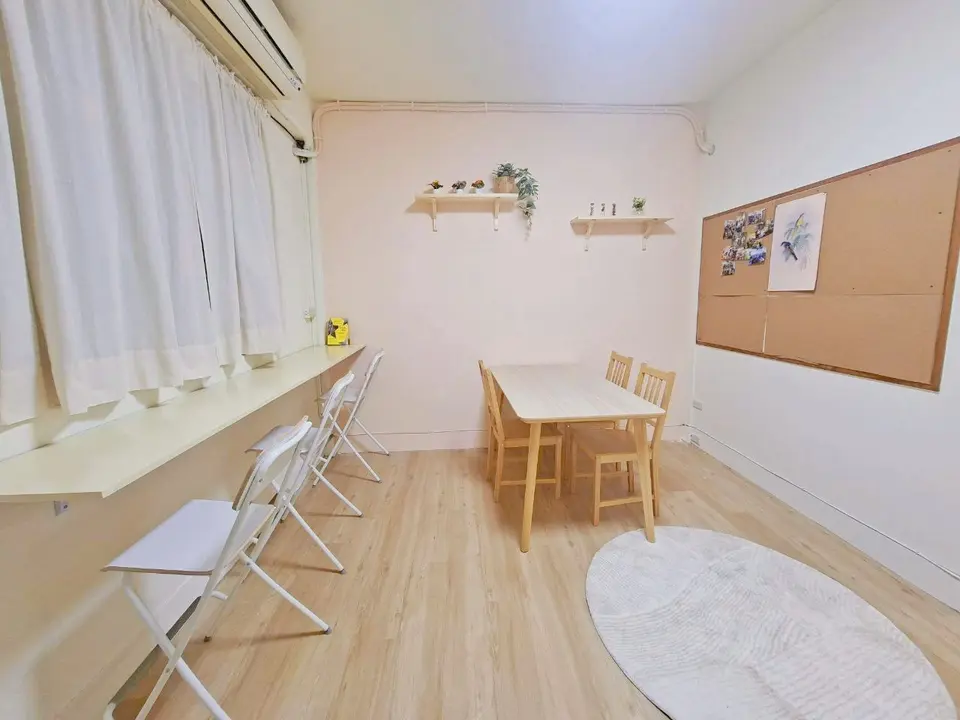
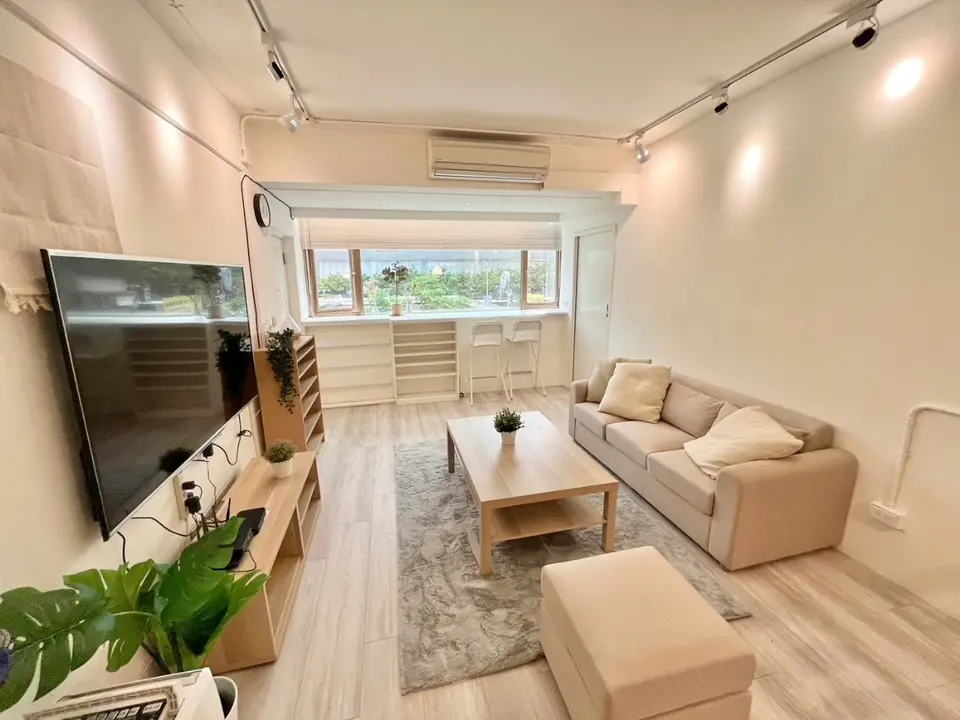
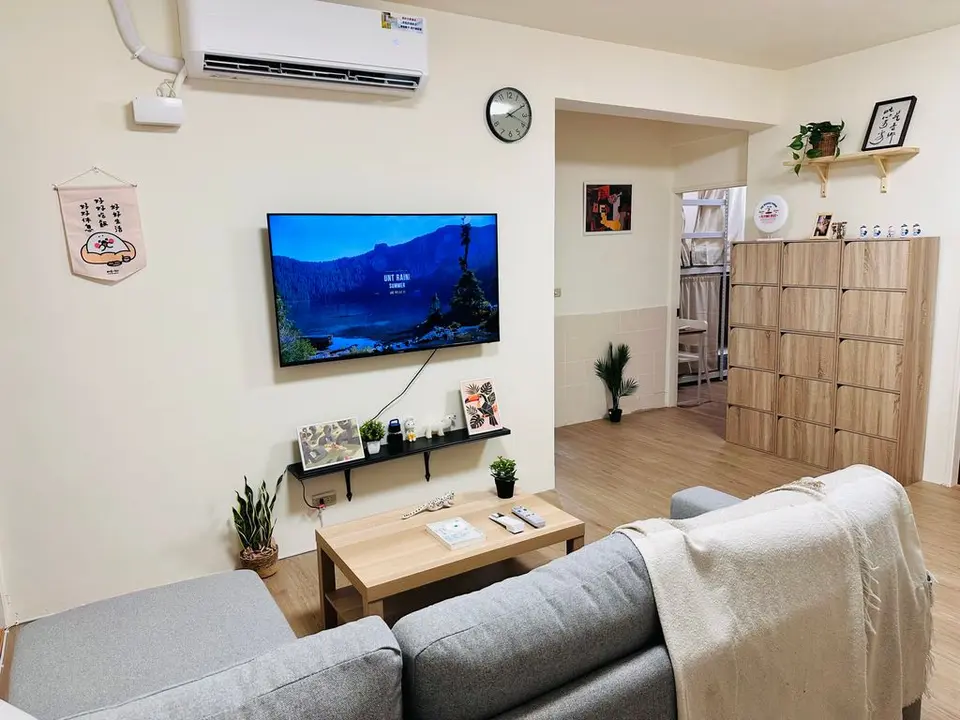
Our approach: Rooms have air conditioning, a desk and chair, a wardrobe, a bed frame, a mattress and a mattress protector. The shared spaces have a kitchen where you can cook, a fridge, a washing machine, a microwave, a water dispenser, a water heater, a TV and Wi-Fi. Pillows, duvets and bed sheets are not listed on our website, so we suggest bringing your own.
7. Is the commute easy?
Our approach: Our houses are in Xinyi District, Nangang District and Zhongzheng District. For example, CityHall House: Taipei City Hall Station (Bannan Line), about a 2-minute walk; Kunyang House: Kunyang Station (Bannan Line), about a 2-minute walk. Walking times are estimates. To find out how long your commute really takes, we suggest walking it yourself when you come for a viewing.
8. What are the housemates like? Will your daily routines match?
Our approach: The viewing booking form asks about your lifestyle habits, what time you usually go to sleep, and a short self-introduction, so we can understand your daily routine before you move in. Our housemates have also had barbecues, weekend bike rides, hikes and a Christmas gift exchange together.
9. Who do you sign with? Is the operator registered?
If the operator rents the home from the owner and then sublets it to you, the rules require the owner's written consent, and the operator must give you the consent document and a statement confirming the current condition when you sign (Articles 9 and 29)1. You can check whether an operator is registered on the online systems of the Ministry of the Interior or the Department of Land Administration, Taipei City Government3.
Our approach: When you come for a viewing, you can ask us to explain who you sign with and the related documents, item by item.
10. How do viewings work? Can you take the lease home to read first?
Under the Ministry of the Interior's rules for standard-form contracts, a residential lease must give you a review period of at least three days4, so you don't have to decide on the spot.
Our approach: You can book an in-person viewing or a video viewing (even if you are abroad). Send 「看房」 (Chinese for "viewing") or "viewing" to our LINE official account (add us on LINE), or book with the online form. Time slots are morning, afternoon and evening.
After the checklist, what's next?
Photos and text can only help you narrow things down. A room's light, its noise and the feel among housemates are still best judged in person. You can first compare prices and facilities on the house list, and if you're interested, book a viewing. We'll be happy to show you around.
Notes
-
Rental Housing Market Development and Regulation Act (amended 112-02-08, ROC calendar), Laws & Regulations Database of The Republic of China (Taiwan) https://law.moj.gov.tw/LawClass/LawAll.aspx?pcode=D0060125, retrieved 2026-10-05. The word 共居 (co-living) does not appear in the Act; legally, it is still a residential lease or a sublease. ↩ ↩2 ↩3 ↩4
-
Wikipedia "Co-living" (version of 2026-09-08, permanent link https://en.wikipedia.org/w/index.php?title=Co-living&oldid=1373847428) https://en.wikipedia.org/wiki/Co-living, retrieved 2026-10-05. ↩
-
Ministry of the Interior, real estate service industry information system (rental housing service businesses) https://resim.moi.gov.tw/Home/RentIndex; Department of Land Administration, Taipei City Government, search for licensed real estate service businesses https://land.gov.taipei/cp.aspx?n=8092BD84714005C0, retrieved 2026-10-05. ↩
-
Ministry of the Interior, 「住宅租賃定型化契約應記載及不得記載事項」 (mandatory and prohibited provisions for standard-form residential lease contracts; current version amended 114-04-18, ROC calendar) https://glrs.moi.gov.tw/LawContent.aspx?id=GL000907; 「住宅轉租定型化契約應記載及不得記載事項」 (the same for residential sublease contracts; amended 113-11-21, ROC calendar) https://www.ey.gov.tw/Page/DFB720D019CCCB0A/64abee92-0677-4a8a-b54a-ee644e611ad3; for all past announcements, see the Department of Land Administration, Ministry of the Interior https://www.land.moi.gov.tw/chhtml/content/89?mcid=4016, https://www.land.moi.gov.tw/chhtml/content/89?mcid=3582, retrieved 2026-10-05. ↩
Approximate conversions use the Bank of Taiwan rate on 14 Oct 2026. You pay in Taiwan dollars.

