Co-living guides
Shared room or private room in Taipei co-living? What each is like and how to choose
Co-living in Taipei doesn't always mean a room of your own; many places are shared rooms with several beds. This guide compares shared and private rooms on privacy, storage, daily rhythm, noise and cost, says plainly who settles in and who doesn't, and lists what to ask at the viewing.
Seal Co-living team Updated 14 min read Translated from Chinese · 中文原文


On this page
- How do a shared room and a private room differ?
- Is a co-living shared room the same as a hostel dorm?
- Who settles into a shared room, and who doesn't?
- What should you confirm before moving in?
- What do Seal Co-living's rooms actually have?
- How do you handle the usual friction after moving in?
- When should you switch to a private room?
- Frequently asked questions
- Next steps
- Sources
The short answer first. A shared room saves you rent and costs you time alone and storage space. If you're out most of the day and come back mainly to sleep, a shared room usually works. If you take online meetings from your room, keep hours very different from most people, or sleep lightly, look for a private room from the start.
Readers from Japan tend to hear "share house" and picture a private room for each person. Co-living in Taipei doesn't always work that way, and Seal Co-living is mostly shared rooms. Before you choose, get clear answers to these questions.
- Does this price get you a room, or a bed?
- How many people sleep in the room when it's full? Bunk beds or single-level beds, and are there bed curtains?
- Which storage is yours, and can you lock it?
- Who controls the air conditioner, and how is electricity charged?
- Roughly when do the others go to bed and leave in the morning, and are there quiet hours?
- Can visitors come into the room? Can they stay overnight?
- If it doesn't suit you, how do a room change or an early move-out work?
How do a shared room and a private room differ?
| Shared room | Private room | |
|---|---|---|
| Privacy | Someone is nearby while you change, take a call or just zone out | Close the door and the space is yours |
| Storage | Your own cabinet plus the area around your bed, so pack light | The whole room |
| Daily rhythm | Lights, alarms and comings and goings affect everyone | Up to you |
| Noise | You hear snoring, turning over and typing | Only the next room and the shared spaces |
| Air conditioning | The temperature is negotiated | You set it |
| Cost | Lower monthly rent per bed | Higher monthly rent |
| Meeting people | You see each other daily and end up talking | You have to walk out to the living room |
Privacy is where the gap is widest. In a shared room, your bed is the whole of your private territory. You change in the bathroom or behind a bed curtain, and video calls move to the living room or the workspace. In a private room you close the door and nobody sees what you're doing.
Storage comes second. A shared room usually gives each person a cabinet plus a little space under or beside the bed. The contents of a large suitcase will fit; anything beyond that starts piling up on the bed. If you plan to live there for half a year or longer and expect to pick up winter clothes and books along the way, work out where they'll go first.
Daily rhythm and noise are really the same issue. Put an early-shift worker and a late-shift worker in the same room, and everyone gets woken once or twice a day. Earplugs and an eye mask block most of it. What they can't block is someone switching on the main light in the middle of the night, or an alarm that rings for five minutes with nobody turning it off.
Cost is the biggest advantage of a shared room. Within the same house, the more people a room sleeps, the lower the monthly rent per bed tends to be; how much lower depends on each operator's price list. A "from" price on its own is easy to misread, because it usually belongs to the room with the most beds. For what a room of your own costs in Taipei, whether a room with shared bathroom or a studio, Co-living, en-suite room, room with shared bathroom or monthly rental apartment? Comparing places to live in Taipei for foreigners lays it out using Ministry of the Interior data.
The last row of the table is easy to overlook. In a shared room you run into people while brushing your teeth in the morning and coming back at night, and your Chinese or English gets practice without you noticing. A private room is peaceful, but you may go a whole week without really talking to anyone. In your first few months in Taipei, when you know nobody, that difference matters more than you'd expect.
Is a co-living shared room the same as a hostel dorm?
The rooms look alike. Living in them is very different.
A hostel is for travellers passing through. You pay by the night, the person in the next bed changes every two or three days, and suitcases rolling in and out after midnight are normal. A co-living shared room comes with a residential lease. Your housemates are the same few people, each with a job or classes to go to, their luggage put away in cabinets, and daily life feels closer to a student dormitory.
The legal footing differs as well. Article 4 of Taiwan's Rental Housing Market Development and Regulation Act says the Act does not apply to rentals shorter than 30 days, or to rentals for leisure or travel. Only a residential lease of 30 days or more brings in protections such as Article 7, under which the deposit may not exceed 2 months' rent. That is why co-living comes with a minimum lease, a deposit and a written contract. It takes a bit more paperwork than booking a bed, and in return you hold a lease the Act protects.
For the people living there, the part you feel most is that your roommates stay the same. After a few months with the same group, everyone knows who sleeps when, who feels the cold and who snores, and that is what makes it possible to agree on rules. A hostel dorm never gets that far.
Who settles into a shared room, and who doesn't?
People who settle in well tend to have a few things in common. They spend the day at school, at the office or at a part-time job and come back mainly to shower and sleep. They travel light, with a suitcase or two holding everything they own. They sleep soundly, or already wear earplugs out of habit. Their budget is tight and they would rather spend on tuition and food. Then there are people who have just arrived in Taiwan and want to meet others quickly, which describes a lot of language school students and working holiday makers.
The cases where it doesn't work are just as clear.
- You work from home, or have online meetings or online classes every day. The bedroom is no place for long conversations, and the shared spaces won't always have a free seat.
- Your hours are out of step with most people, such as overnight shifts or always going to bed towards dawn. You'll wake others, and they'll wake you during the day.
- You sleep lightly and are sensitive to sound and light. Earplugs help, but it's hard to depend on them every single night.
- You own a lot. Instruments, camera gear or a full set of cookware won't fit in a shared room.
- You need time alone to recharge. Some people simply need a door they can close, however easy they are to live with.
- Your partner or friends often stay over. In a shared room that's close to impossible.
Matching one or two of these doesn't rule a shared room out, but treat it as a serious warning. Signing a shorter lease first and trying it out is the safer way to go.
What should you confirm before moving in?
Photos show the beds and the windows. They don't show the rules. Go through the points below one by one at the viewing, whether you're there in person or on a video viewing.
How many people, and how the beds are arranged. Both are called shared rooms, yet a twin room and a 6-bed room are different ways of living. Ask how many people the room holds when full and whether the beds are bunks or single-level; with bunks, ask whether you'd get the upper or the lower one. The upper bunk means climbing up and down, the lower one means someone turning over above your head, and each has its own annoyances.
Bed curtains and a personal light. A bed curtain works like one extra thin wall, and it makes changing clothes or scrolling on your phone late at night far easier. If there isn't one, ask whether you may put up your own.
Personal storage. Does each person have a wardrobe, or is it shared? Is there a drawer or cabinet that locks? Where do suitcases go? Is there a desk for everyone, or do you take turns?
Air conditioning and electricity. Summer in Taipei is long, and the air conditioner runs almost daily. If electricity is split by metered use, the people who run hot and the people who run cold will soon disagree. If it's covered by a flat fee, only the temperature is left to negotiate. Either way, ask who looks after the remote and whether there's a usual setting for sleeping.
The others' daily rhythm and quiet hours. Ask directly when the people now living in that room usually go to bed and when they leave. Ask too whether quiet hours are a written rule or an understanding among the people in the room.
Visitors. Whether friends may come into the shared spaces, into the room, and stay overnight. Ask each separately.
Valuables. Where do your passport, cash and laptop normally go? Does the room door lock, and who holds the keys?
Changing rooms and moving out. How it's calculated if the room doesn't suit you and you want to switch, or if you move out early. This one is best asked before you sign, and ask for the answer in writing.
Questions that apply to any room, such as the contract, the deposit and the fees, are covered in Choosing a Share House in Taipei: 10 Things to Check Before You Move In, so they aren't repeated here.
What do Seal Co-living's rooms actually have?
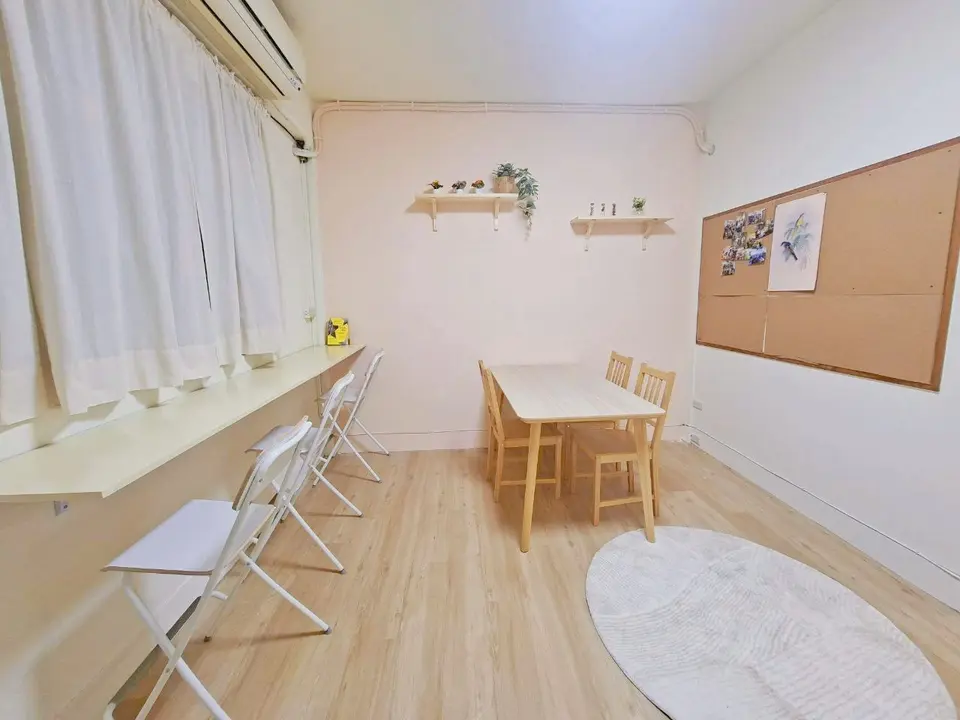
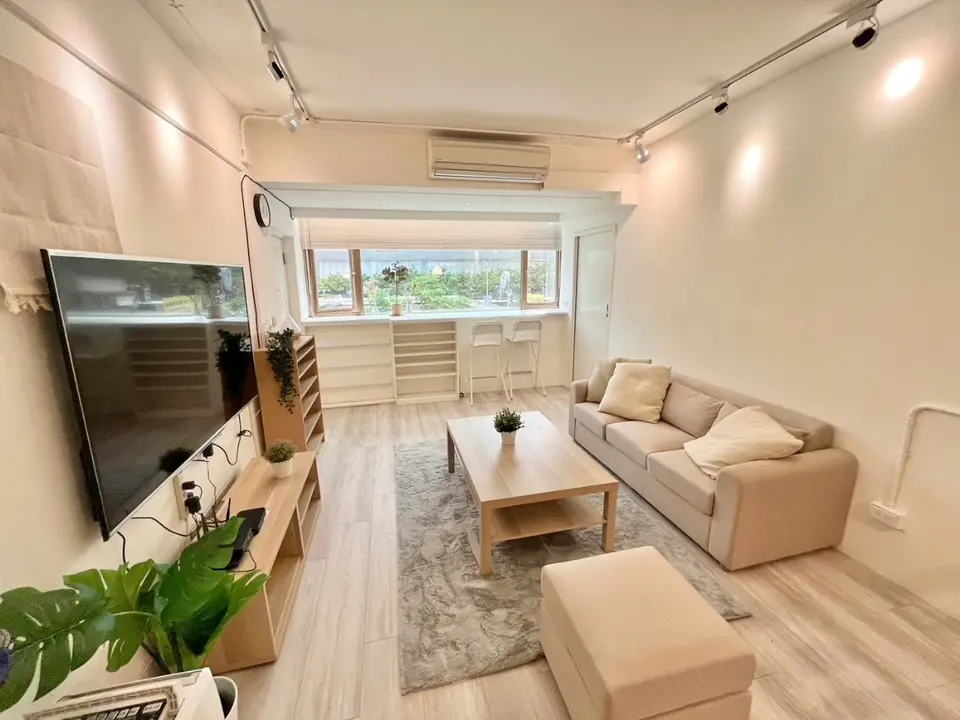
Our rooms are mainly shared rooms, from twin rooms up to 6-bed rooms, and only some houses have private rooms. The room types listed for each house are below; click through for photos of every room.
| House | Room types |
|---|---|
| Guangci House | Twin room, 3-bed room, and 4-bed room |
| Songlong House | Twin room, 3-bed room, and 4-bed room |
| CityHall House | 4-bed room |
| Houshanpi House | Single room, Twin room, 3-bed room, and 4-bed room |
| Kunyang House | Single room, 3-bed room, and 4-bed room |
| Songshan House | Single room, Twin room, and 3-bed room |
| Gongguan House | Single room, 3-bed room, 4-bed room, and 6-bed room |
In every house the rooms have air conditioning, a desk and chairs, a wardrobe, bed frames and mattresses, and the shared spaces include a kitchen you can cook in, a living room, a workspace, a washing machine and a laundry balcony. Water, electricity, gas, internet and shared supplies are all covered by the monthly utilities fee of NT$1,000. The amount is fixed, so there's no bill to split with your housemates each month.
Some things aren't listed on the website and may differ from room to room: whether the beds are bunks or single-level, whether there are bed curtains, whether each person has their own wardrobe and desk or shares them, and whether there's storage that locks. Quiet hours and visitor rules aren't written on the website either. Please confirm these one by one at the viewing; the room photos give you a rough idea beforehand.
On price, monthly rent starts from NT$8,000 (≈ US$250) per bed, which is the rate for a lease of a full year. The minimum lease is 30 days, and the shorter the lease, the higher the monthly rent.
| Lease length | Monthly rent per bed |
|---|---|
| 30 days to under 6 months | Base price + NT$1,000 |
| 6 to under 12 months | Base price + NT$500 |
| 12 months or longer | Base price |
For the difference between room types, take Songshan House as an example. Monthly rent for each room by lease length is as follows.
| Room | 30 days to under 6 months | 6 to under 12 months | 12 months or longer · Base price |
|---|---|---|---|
| A2-1 · Twin room | NT$10,500≈ US$325 | NT$10,000≈ US$310 | NT$9,500≈ US$295 |
| A1-1 · Single room | NT$15,000≈ US$465 | NT$14,500≈ US$450 | NT$14,000≈ US$435 |
| A2-3 · Twin room | NT$10,500≈ US$325 | NT$10,000≈ US$310 | NT$9,500≈ US$295 |
| A3 · 3-bed room | NT$9,800≈ US$305 | NT$9,300≈ US$290 | NT$8,800≈ US$275 |
The viewing booking form asks for your usual bedtime and your living habits, so that we understand your daily rhythm before you move in.
How do you handle the usual friction after moving in?
Friction in a shared room comes down to the same few things over and over: noise, lights, air conditioning, smells, and belongings creeping over the line.
Noise and lights are best settled in the first week. Within a few days of moving in, find a time when everyone is around, say when each of you sleeps, and agree on an hour after which the main light stays off and phone calls go outside. Raised at the start, this is a natural conversation; raised after two months, it sounds like a complaint.
The comfortable temperature differs from person to person. The usual compromise is a setting in the middle, with those who feel the cold adding a blanket and those who feel the heat bringing a small fan of their own.
Smells cover eating in the room, damp towels, shoes and unwashed clothes. Taipei is humid, clothes and towels dry slowly, and anything left shut in the room starts to smell fast. Food stays in the kitchen and damp things go out to the balcony, which is the understanding in most shared rooms. For dealing with humidity and laundry in Taiwan, see How apartments in Taiwan differ from Japan: humidity, laundry, bathrooms and power bills.
Belongings creeping over the line is mostly unintentional. A suitcase pushed up against someone else's bed, a charging cable hogging the shared socket, a jacket hung on someone else's chair: over time these harden into resentment. A quick word when you notice it beats holding it in for three weeks and then blowing up.
If talking doesn't help, or you can't bring yourself to say it face to face, go to whoever manages the place. In co-living run by an operator, there is someone in the middle who can step in; when you move in, ask who to contact about this kind of thing. Getting the hang of co-living for the first time: getting along with housemates, shared spaces, and your first-week checklist goes into more detail on getting along with housemates and using the shared spaces.
When should you switch to a private room?
You've tried earplugs, talked through the rules and gone to the manager, and things still look like the following. Stop forcing it.
You've slept badly for two weeks or more and it's affecting your work or classes during the day. Your work has changed and you now have meetings from home or night shifts. Your things no longer fit on the bed. Or you notice that you put off going back to your room until late every night.
Read your contract before you switch. How an early room change or move-out is calculated and what happens to the deposit vary by operator; for how Seal Co-living handles it, please ask us directly. There are far fewer private rooms than shared rooms, so working out which kind of person you are at the start is less trouble than switching after you've moved in.
It works the other way round too. For someone who finds a private room isolating and wants to save on rent, a twin room is often a good middle option.
Frequently asked questions
Can I stay in a shared room for just one month?
It depends on each operator's minimum lease. Seal Co-living's minimum lease is 30 days, so you can stay from one month. A short lease has a higher monthly rent than a long one, and Short-term rental in Taipei from 30 days: renting for one to six months, and the total cost works out what you'd pay in total.
How do I keep valuables safe in a shared room?
Don't leave your passport or large amounts of cash on the bed or in an unlocked cabinet. Bring a small combination lock for your suitcase or for a cabinet that takes a padlock, and put your laptop away in the cabinet when you go out. Check on the spot at the viewing whether the room door and the storage can be locked.
Can I work or take online classes in a shared room?
Typing and reading are fine. Anything that needs you to speak isn't a good fit. Where there's a workspace or a living room you can move calls there, though others may be using it at busy times. If you have meetings every day, we'd suggest going straight for a private room.
How is the air conditioning electricity split in a shared room?
It varies by operator. The common arrangements are splitting metered use evenly or charging a flat fee. Before signing, ask which one applies and what the flat fee includes.
Can I move to a private room partway through?
That depends on your contract and on whether a suitable room is there at the time. Ask before you sign how a room change is arranged and how the cost is calculated.
Next steps
For photos and prices of every room, go to the house list. To see the beds and storage for yourself, book a viewing, in person or by video. Who we suit and who we don't is written up separately in Why choose Seal Co-living: transparent pricing, a 30-day minimum lease, fully furnished rooms, and a housemate community.
Sources
- Laws and Regulations Database of the Republic of China (Taiwan), Rental Housing Market Development and Regulation Act: https://law.moj.gov.tw/LawClass/LawAll.aspx?pcode=D0060125 (checked on 10 Oct 2026)
- Seal Co-living's room types, furnishings and fees: the house list on our website and each house page
Approximate conversions use the Bank of Taiwan rate on 14 Oct 2026. You pay in Taiwan dollars.