Co-living guides
Mandarin student housing in Taipei: NTNU and NTU dorms and 1–3 month stays
NTU's Mandarin centers state that language students must rent off campus, and the accommodation pages of NTNU's Mandarin Training Center list only off-campus places. NCCU has a few dorm beds, given out by lottery. This guide covers the terms at four centers, the dorm situation, the kinds of off-campus housing, the MRT stations for each school and what to do when a 3-month term meets a one-year lease, with links to each center's official pages.
Seal Co-living team Updated 14 min read Translated from Chinese · 中文原文


On this page
- Which universities in Taipei have a Mandarin center, and how long is a term?
- Do the Mandarin centers at NTNU and NTU have dorms?
- Where can you live off campus, and who does each option suit?
- What if your term is 3 months and the landlord wants a year?
- When should you start looking, and how do the first days go?
- Which MRT station do you use for each school?
- How close is Gongguan to NTU and NTNU?
- Visas: is 90 visa-free days enough for one term?
- Mistakes language students often make
- Frequently asked questions
- Sources
If you come to Taipei to study at a university Mandarin center, you will most likely have to find your own place to live. Both of NTU's Mandarin centers say on their websites that they do not arrange housing for language students. The accommodation pages of the Mandarin Training Center at National Taiwan Normal University (NTNU) list off-campus places only. National Chengchi University (NCCU) does have dorm beds, though very few, and they are drawn by lottery.
That leaves a short list of things to settle before you fly.
- Decide which center and how many terms. A term is about 3 months, and that is the length to look for.
- Check which MRT station the classrooms are near. NTNU's Mandarin Training Center is close to Guting and Taipower Building stations. NTU's Mandarin centers are close to Gongguan and Technology Building stations.
- Find out whether you can rent for just 3 months. Landlords in Taipei usually expect a one-year lease, so a short stay has to be asked for, or you look at places that already take short leases.
- Start looking the week your admission letter arrives, and book your first few nights before you leave.
This article is only about Mandarin center students. Dorm application rules for exchange and degree students are in Student housing near NTU, NTUST and NTNU: dorms, off-campus rooms and one-semester leases.
Which universities in Taipei have a Mandarin center, and how long is a term?
We could read the official pages of four centers. All of them run on a quarter system, so you can start at several points in the year.
| Mandarin center | Terms per year | Length of a term | Where classes are |
|---|---|---|---|
| NTNU Mandarin Training Center (MTC) | 4 | About 3 months | Bo-ai Building, No. 129, Sec. 1, Heping E. Rd. |
| NTU Chinese Language Division (CLD) | 4 | About 3 months | Language Center, No. 170, Sec. 2, Xinhai Rd. |
| NTU International Chinese Language Program (ICLP) | 3 in the academic year program, plus a summer term | 10 or 11 weeks per academic-year term, 9 weeks in summer | Same building as CLD |
| NCCU Chinese Language Center | 4 | 12 weeks in spring, summer and autumn, 10 weeks in winter | No. 64, Sec. 2, Zhinan Rd., Wenshan District |
Besides its regular terms, NTNU's MTC runs a 2-month summer session in July and August, and its short-term programs include a 3-week express course. Regular classes at NTU CLD and at NCCU are both 15 hours a week. At CLD that means three classes a day, Monday to Friday.
Start dates and deadlines differ by center. Take spring 2027. NTNU's MTC runs from March 4 to May 26 and closes applications on January 15. NTU CLD runs from March 1 to May 21, takes applications until November 22, 2026, and closes early once the term is full. The two deadlines are almost two months apart, so check the dates for your term on the center's own page.
Do the Mandarin centers at NTNU and NTU have dorms?
NTU first. CLD's accommodation and insurance page is blunt: "本中心語文學習者,均需自行在外租屋。" Every language learner at the center has to rent off campus. The page gives the reason too. NTU's dorm space is limited and open only to students with regular enrollment status. What the page offers instead is reference material for house hunting, including renting tips, a viewing checklist and sample leases in Chinese and English.
ICLP's Housing page says the same. ICLP cannot provide housing directly or make hotel arrangements (its 領航 summer program is the exception), and students are responsible for finding their own place. The page lists a single off-campus accommodation for reference.
At NTNU, the Mandarin Training Center's website has no dorm application for students in its regular terms. Its accommodation information is split across two pages. The short-term page gives names and contact details for hotels and share houses. The long-term page lists rental websites (591, the Tsuei Ma Ma Foundation and others) and adds reminders about signing and viewing. The school gives you lists and warnings, and you negotiate the room yourself.
NCCU is a little different. Students of its Chinese Language Center can apply for university dorms. The quota on the official site is 20 beds in the Ziqiang dormitory (自強十舍; 10 each for men and women, in double rooms), plus 16 beds per term reserved in the International House. A lottery is held after the application deadline, and dorm stays are booked by the term, which is 3 months. Anyone who misses out looks off campus like everyone else. The center also warns that housing near campus is scarce, especially in early September, and advises arriving in Taipei 1 to 2 weeks early.
So nearly all language students at NTNU and NTU live off campus.
Where can you live off campus, and who does each option suit?
A room near campus, with a shared or a private bathroom. In Taiwan these are called 雅房 (shared bathroom) and 套房 (en-suite). There are plenty of them and many are within walking distance of class. The catch is that most landlords want a one-year lease, and you often have to sort out furniture, internet and utilities yourself. This route suits people who plan to study three terms or more and can already talk to a landlord in Chinese. Where to look and which documents to check are covered in Common sticking points for foreigners renting in Taipei: agent's fees, deposits, lease language, ARC address registration, and how Seal Co-living handles them. How to search 591 without reading Chinese is covered in Finding a room in Taipei without Chinese: how to use 591, what the listing terms mean, and other ways to search.
A hostel or hotel as a stopgap. This works for your first week or two, while you view rooms in person. Most of what NTNU's MTC lists on its short-term accommodation page is this kind of place. For a whole term it rarely pays off, because there is nowhere to keep your luggage and the cost adds up night by night.
Co-living. The room is furnished, water, power and internet are already connected, and you sign a residential lease. Some operators take short leases of 1 to 3 months. If you are here for one or two terms and would prefer to skip buying a mattress and setting up internet for three months, this is the least work. The trade-off is sharing the common areas with housemates, and in a shared room you share the bedroom as well. NTNU MTC's short-stay page lists operators of this kind.
A homestay. Living with a local family gives you the most Chinese practice, and you fit your routine around theirs. On the accommodation pages of these four centers we found no mention of a school arranging homestays, so you would have to find one through an agency or a platform.
The differences between room types and rough price levels are laid out in Co-living, en-suite room, room with shared bathroom or monthly rental apartment? Comparing places to live in Taipei for foreigners.
What if your term is 3 months and the landlord wants a year?
For an ordinary room in Taipei, a landlord's opening offer is usually one year. A language student's enrollment runs one term at a time, and whether you continue is often decided only as the current term ends. There are a few ways around the mismatch.
You can simply ask. When you like a room, start with "Can I sign for 3 months or half a year?" Some landlords say yes, often for slightly higher rent, which is normal.
You can also sign for a year and have the early move-out terms written into the lease. How much notice you give and how much you pay should both be on paper. The first reminder on NTNU MTC's rental page is to sign a contract however short the stay, to have both parties sign or stamp any change to it, and to keep a copy each. A spoken "we'll sort it out later" tends to be hard to settle when you leave.
Or you start with a place that takes short leases, such as co-living or a room rented by the month. The monthly rent is higher than on a one-year lease. In return, you are not betting on whether you will stay on. The options for a stay from one month in Taipei, and how to compare them, are in Short-term rental in Taipei from 30 days: renting for one to six months, and the total cost.
One more point if you plan to continue. At NTNU's MTC there are only a few days to just over a week between one term and the next. Set your move-out date a few days after the last class, so you have time for exams, moving or a visa extension.
When should you start looking, and how do the first days go?
Count back from the application deadline and there is not much time. For spring 2027, NTNU's MTC closes applications on January 15 and classes begin on March 4. That is under two months, and the visa takes part of it.
- When you apply, check which station the classrooms are near and mark the area you would live in.
- The week your admission letter arrives, start browsing rooms online, book video viewings and narrow the list to two or three.
- Confirm the lease, the costs and the move-in date 4 to 6 weeks before classes start. Do not send a holding payment for a room you have not seen in person or on video.
- Before you leave, book your first few nights and work out the way from the airport into the city. How to get from Taoyuan Airport to Taipei: Airport MRT, buses, taxis and late-night arrivals can help.
- On days 1 to 2 after you land, get a mobile number and an EasyCard. On days 2 to 5, view rooms in person and sign, and walk the route to school once at class time.
- Check your admission notice for registration and start dates, and keep moving day off those dates.
NCCU's center advises arriving 1 to 2 weeks early. If you are going to NTNU or NTU and still have no room, allow about the same.
Which MRT station do you use for each school?
NTNU's Mandarin Training Center is in the Bo-ai Building on Sec. 1 of Heping East Road. According to the center's website, it is about 8 minutes straight ahead toward Heping East Road from Exit 5 of Guting Station, on the Songshan-Xindian and Zhonghe-Xinlu lines. From Exit 3 of Taipower Building Station on the Songshan-Xindian Line, it is about 9 minutes toward Shida Road. From Exit 5 of Dongmen Station, it is about 10 minutes toward Lishui Street.
NTU's CLD and ICLP are both in the Language Center on Sec. 2 of Xinhai Road, on the Xinhai Road side of the campus. CLD's website describes the walk from each station. From Exit 3 of Gongguan Station on the Songshan-Xindian Line, you enter by the main gate and cross the campus, a walk of about 15 to 20 minutes. From Technology Building Station on the Wenhu Line, you walk south to the end of Fuxing South Road and enter by the back gate on Xinhai Road, in about 10 to 15 minutes. The walk from Technology Building Station is a little shorter.
NCCU's Chinese Language Center is not next to an MRT station. The routes on its website take the MRT to Gongguan, Jingmei or Taipei Zoo Station and then a bus to the NCCU stop. If you are going to NCCU, look at the bus routes before you look at rooms.
For other parts of the city and how the MRT lines connect them, see Where to live in Taipei: choosing an area by commute, MRT line and night-time safety.
How close is Gongguan to NTU and NTNU?
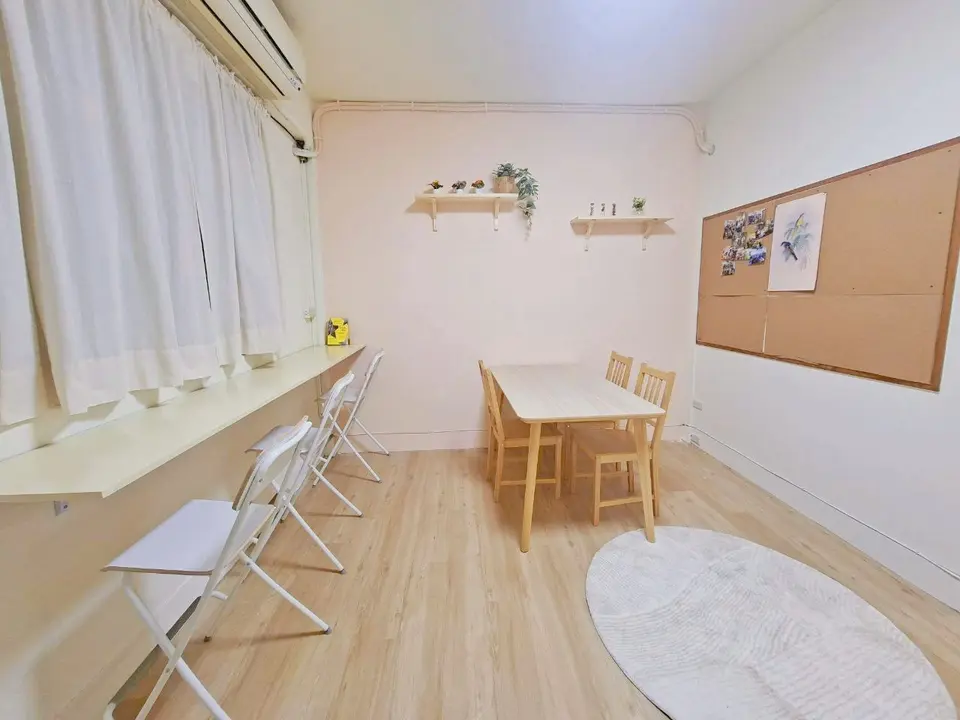
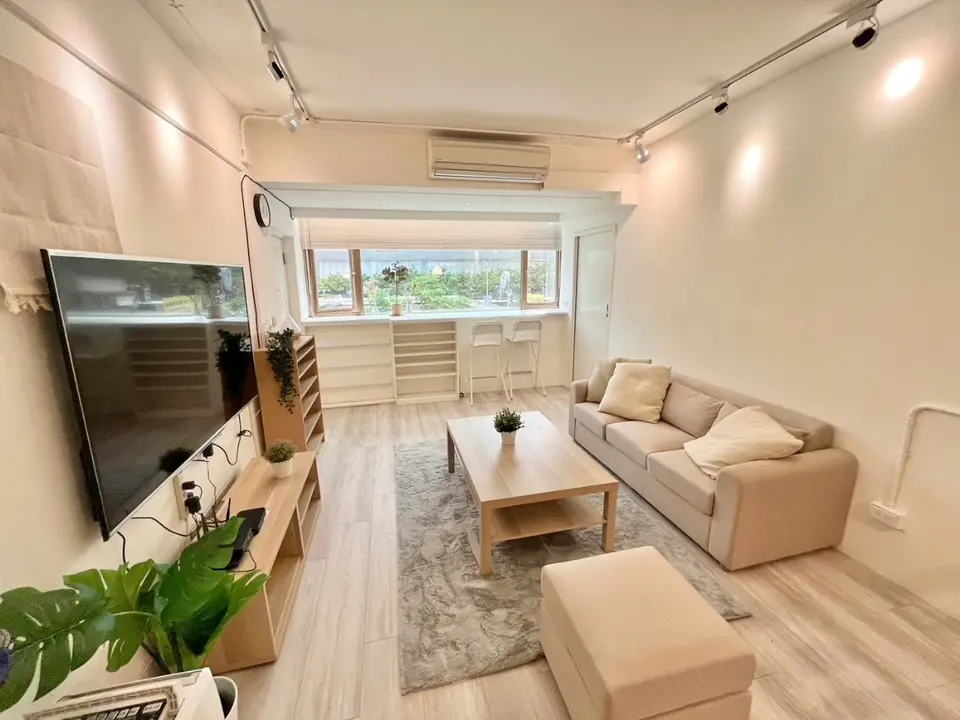
Seal Co-living has one house in Gongguan: Gongguan House, Gongguan Station (Songshan-Xindian Line), about a 3-minute walk. Gongguan Station is the stop for NTU's main gate. Going by the station order of Taipei Metro's Songshan-Xindian Line, Taipower Building Station is 1 stop from Gongguan toward Songshan, and Guting Station is 2 stops. NTNU's Mandarin Training Center sits between those two stations and can be walked to from either. For NTU's CLD or ICLP, you cross the campus from the main gate as described above.
The minimum lease is 30 days, so you can move in for as little as one month. It is a residential lease. Whether you need one 3-month term or two terms and half a year, confirm the lease length with us when you book. Monthly rent depends on the lease length:
| Lease length | Monthly rent per bed |
|---|---|
| 30 days to under 6 months | Base price + NT$1,000 |
| 6 to under 12 months | Base price + NT$500 |
| 12 months or longer | Base price |
For the cheapest bed, 3 months of rent and the utilities fee plus the one-time move-in fee come to NT$31,500 (≈ US$980). The deposit (1 month of rent) is separate. Most rooms are shared rooms, and they come furnished. Video viewings are available, so you can see the room while you are still abroad. Whether bedding is included and how signing and payment work from abroad are things to ask us when you book: book online, or see the houses near other stations in the house list.
Visas: is 90 visa-free days enough for one term?
Before deciding how long to rent, check how long you can legally stay. Your move-out date cannot be later than your permitted stay.
The Bureau of Consular Affairs lists Japanese passport holders as eligible for visa-exempt entry for 90 days. The count starts the day after arrival, it cannot be extended, and as a rule it cannot be converted to another visa inside Taiwan. NTNU MTC's visa FAQ says a 90-day exemption is enough for one term. It adds that if you enter too early you may not be able to finish the last few days of class, so check your dates against the academic calendar. If you plan two terms or more and would prefer to avoid leaving every 90 days, you can apply for a visitor visa for Chinese study before you travel. If the visa the overseas office issues is an extendable one, you can apply to extend it in Taiwan, up to a stay of 180 days. One marked as not extendable means leaving when it expires. Visa-exempt periods differ for other nationalities, so look up your own on the Bureau's page.
Which one fits you and which documents you need are questions for the official pages, under the rules in force when you apply:
- Bureau of Consular Affairs, Visa-Exempt Entry
- Taipei Economic and Cultural Representative Office in Japan, Visitor visa for language study (in Japanese)
- NTNU Mandarin Training Center, Visa FAQ
Mistakes language students often make
The most common one is assuming the school will arrange a dorm, and finding out otherwise only when the admission letter arrives. The next is counting only the weeks of class. You also need a bed for the days you arrive early and the days you spend packing after the last class, so allow some slack in the lease.
Some people move far out to save on rent. Mandarin classes meet every day, and an extra 20 minutes each way adds up over a term. Decide on a commute you can accept first, then compare rents.
Another is paying for a room you have never seen. A video viewing is good for narrowing the list. Pay the holding deposit after you have seen the room and read the lease. On move-in day, photograph the room as you found it, which heads off arguments when you move out. NTNU's MTC makes the same point in its rental reminders.
Frequently asked questions
Can I live in an NTNU dorm while studying at the Mandarin Training Center?
The center's website has no dorm application for students in its regular terms. Its accommodation pages list off-campus hotels, share houses and rental websites. To find out whether any other arrangement exists, email the center directly.
Does NTU's Mandarin center have a dorm?
No. CLD's website states that language learners must rent off campus and that NTU dorms are only for students with regular enrollment status. ICLP also states that it does not provide housing directly.
Can I get a room for 3 months if I only study one term?
Yes, if you pick the right type. With an ordinary private room you have to negotiate with the landlord. Co-living and rooms rented by the month already take short leases. At Seal Co-living the minimum lease is 30 days.
What happens to my housing if I decide mid-term to continue?
Before you sign, ask how renewal works and how much notice is needed. At Seal Co-living the monthly rent depends on which bracket your whole lease falls in, so ask us before signing how staying on would be calculated.
How far from school is reasonable?
It depends on you. A simple way to work it out is to add the number of MRT stops to the walks at both ends, and keep the one-way total within what you are willing to do every day. For NTNU, look around Guting and Taipower Building stations. For NTU, look around Gongguan and Technology Building stations. How to use the MRT and buses is covered in New to Taipei? How to get around by MRT, bus, YouBike, TPASS and taxi.
Sources
(All retrieved on 2026-10-10)
- 1.NTNU Mandarin Training Center, regular termsmtc.ntnu.edu.tw/course-seasonal.htm
- 2.NTNU Mandarin Training Center, short-term programsmtc.ntnu.edu.tw/couse-short-term.htm
- 3.NTNU Mandarin Training Center, long-term rental information (Japanese version)mtc.ntnu.edu.tw/jap/rent.html
- 4.NTNU Mandarin Training Center, short-term accommodation (Japanese version)mtc.ntnu.edu.tw/jap/hotel.html
- 5.NTNU Mandarin Training Center, locationmtc.ntnu.edu.tw/map.html
- 6.NTNU Mandarin Training Center, visamtc.ntnu.edu.tw/visa.htm
- 7.NTNU Mandarin Training Center, visa FAQmtc.ntnu.edu.tw/visa-faq.html
- 8.NTU Chinese Language Division (CLD), accommodation and insurancecld.liberal.ntu.edu.tw/accommodations-and-insurance.html
- 9.NTU Chinese Language Division (CLD), quarterly coursescld.liberal.ntu.edu.tw/schedule-and-fees.html
- 10.NTU Chinese Language Division (CLD), directions and locationcld.liberal.ntu.edu.tw/map.html
- 11.NTU International Chinese Language Program (ICLP), Housingiclp.ntu.edu.tw/housing
- 12.NTU International Chinese Language Program (ICLP), Programsiclp.ntu.edu.tw/program
- 13.NTU International Chinese Language Program (ICLP), Locationiclp.ntu.edu.tw/about/index.php?index_id=3
- 14.NCCU Chinese Language Center, accommodationmandarin.nccu.edu.tw/stu5.php?1
- 15.NCCU Chinese Language Center, regular coursesmandarin.nccu.edu.tw/course1.php?1
- 16.NCCU Chinese Language Center, getting heremandarin.nccu.edu.tw/gethere.php
- 17.Taipei Metro, Songshan-Xindian Linemetro.taipei/cp.aspx?n=EAD981369A065968&s=0F3F913C344BA050
- 18.Bureau of Consular Affairs, Visa-Exempt Entryboca.gov.tw/cp-149-4486-7785a-1.html
- 19.Taipei Economic and Cultural Representative Office in Japan, visitor visaroc-taiwan.org/jp_ja/post/25154.html
Approximate conversions use the Bank of Taiwan rate on 14 Oct 2026. You pay in Taiwan dollars.